


By integrating real estate strategy, engineering insight, capital planning, and financing expertise, we maximize the value of owners’ existing assets before committing capital to new ones. The question is not simply what should be built next. It is whether the institution is extracting the maximum value from what it already owns.
We believe every square foot, every building, and every capital decision should work harder to advance the institution’s mission.
Buildings and space should be managed as part of a portfolio — not as isolated assets.
We believe every square foot should pull its weight.
We believe real estate decisions should strengthen institutional performance for decades.
Timing, sequencing, and capital deployment matter as much as the real estate decision itself.
Improved portfolio utilization and performance
Better capital allocation decisions
Reduced operating and occupancy costs
Greater return on existing real estate assets
Hospitals and universities often manage dozens—or hundreds—of buildings across campuses, clinics, research facilities, academic spaces, and administrative functions. Yet many institutions lack a clear understanding of how each asset contributes to portfolio-wide performance.
Oakwell evaluates utilization, occupancy, operating costs, deferred maintenance exposure, lease obligations, infrastructure needs, and strategic importance across the entire portfolio. We help owners identify underperforming assets, hidden value creation opportunities, and pathways to improve the return on every square foot.

Every portfolio has hidden opportunities. Let's uncover yours.


Greater visibility into infrastructure risk
More informed capital planning decisions
Reduced deferred maintenance exposure
Improved facility reliability and resiliency
Aging buildings often carry hidden liabilities in the form of deferred maintenance, failing infrastructure, code concerns, and operational risks. Without a clear understanding of facility conditions, institutions risk investing capital reactively rather than strategically.
Oakwell evaluates building systems, infrastructure condition, deferred maintenance exposure, operational risks, and future capital requirements to provide owners with a clear picture of what needs attention now, what can wait, and where investment will create the greatest value.

Make capital decisions based on facts, not assumptions — and see what they can unlock.
Reduced occupancy and lease-related costs by 20% to 30%; If we don't produce savings, we don't get paid.
Improved operational flexibility
Stronger alignment between facilities and institutional needs
Greater long-term portfolio value
Lease structures can have a significant impact on cash flow, flexibility, occupancy costs, and long-term portfolio performance. Yet many leases are rarely revisited after execution, leaving opportunities for savings and optimization unrealized.
Oakwell evaluates lease terms, occupancy strategies, facility utilization, and financial structures to identify opportunities for improved economics, operational flexibility, and long-term value creation.
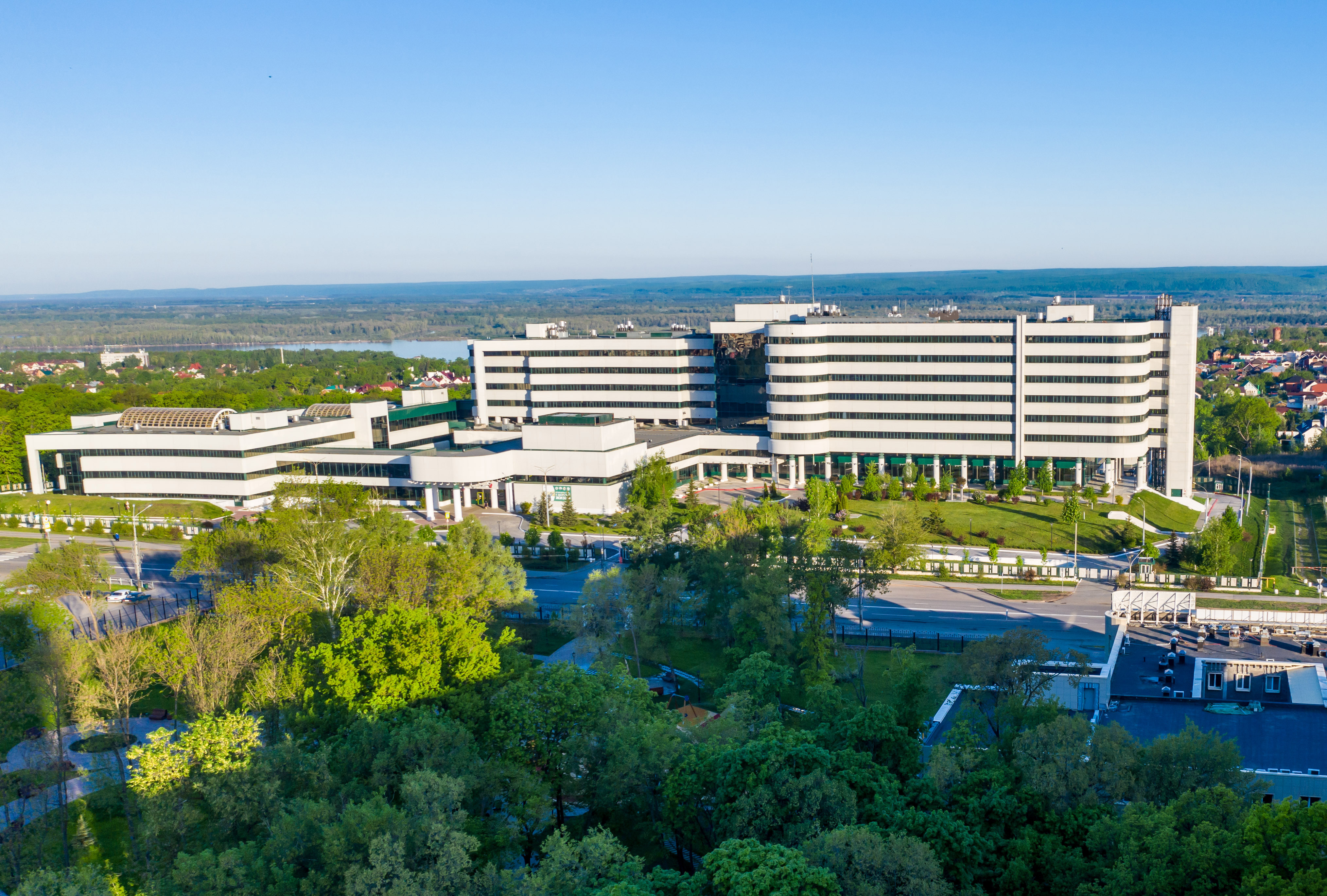
Oakwell evaluates lease opportunities not only through the lens of occupancy cost, but also through long-term capital strategy. In certain situations, innovative lease structures can help institutions unlock value from existing assets, improve financial flexibility, and create new pathways to fund infrastructure modernization.
The best lease is one that creates ongoing value, long after it is signed.
Lower lifecycle costs and reduced deferred maintenance burden
Stronger support for patient care, research, student success, and community impact
Greater resiliency, flexibility, and return on capital
An implementable roadmap that compounds institutional value over decades
Most institutions do not struggle because they lack capable architects, planners, or project ideas. They struggle because each project often begins as a separate conversation—with different stakeholders, priorities, constraints, budgets, and timelines.
Over time, even successful projects can create fragmentation. The campus slowly becomes a collection of well-intentioned, but fragmented decisions rather than a coordinated system.
Oakwell approaches campus master planning through the combined expertise of engineering, infrastructure, real estate, finance and sustainability. We help institutions understand not only what should be built, but where it belongs, when it should happen, how it affects existing infrastructure, and whether it advances the broader institutional mission and vision.
At its best, a master plan becomes institutional intent made visible. It creates continuity across decades, so every project strengthens the whole rather than competing with it.
.jpg)
Most master plans answer the question: "What should we build?"
Oakwell's Compound Value Ladder answers a different question: "What sequence of infrastructure decisions will compound value across the campus and advance the mission?"
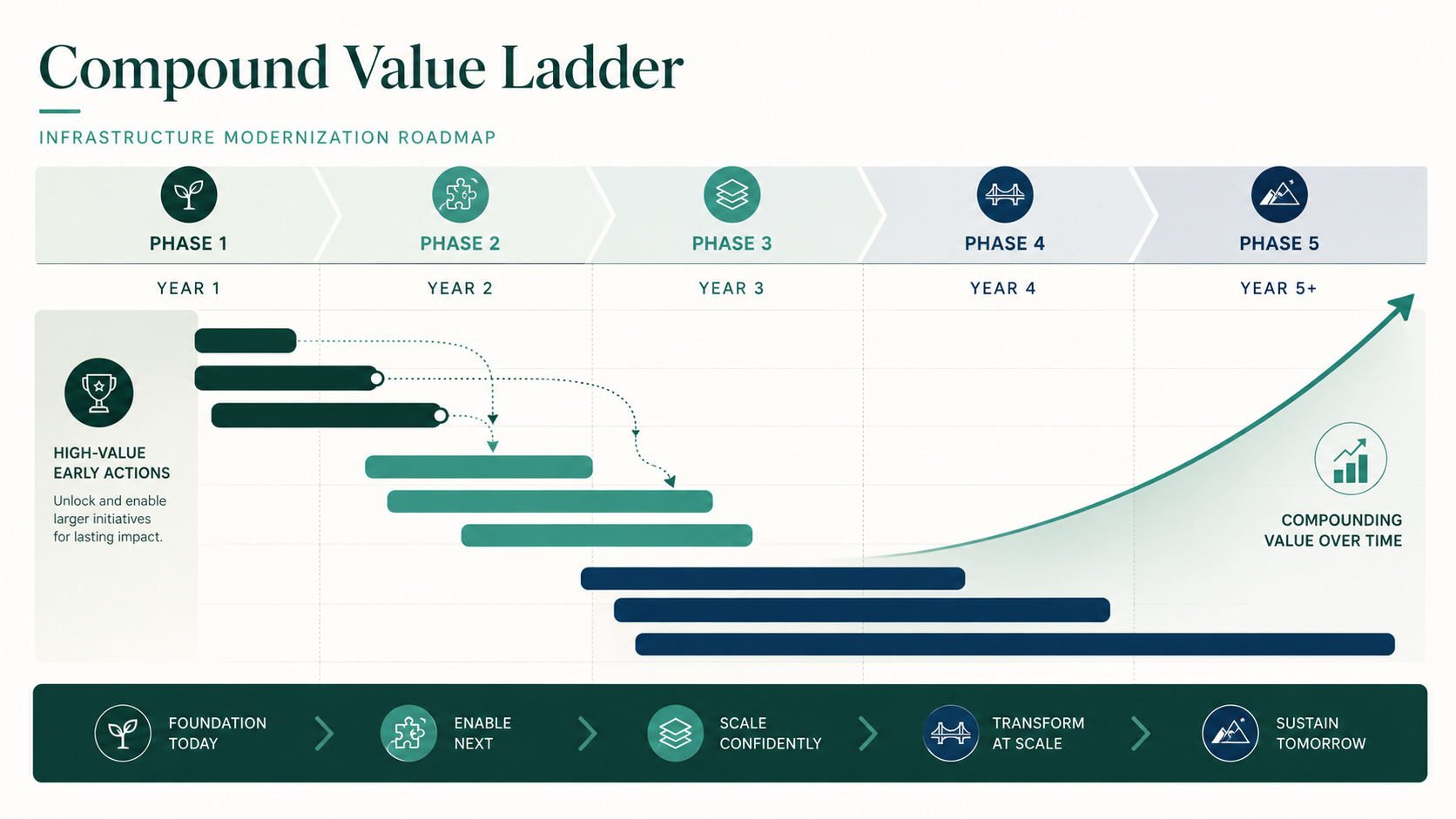
The Compound Value Ladder is our long-term masterplanning framework that prioritizes infrastructure, energy conservation measures, facilities, and real estate investments based on their ability to strengthen institutional performance.
We evaluate projects not only through the lens of capital cost, but through their impact on enrollment growth, research continuity, patient care, community access, operational resiliency, deferred maintenance reduction, emissions goals, and total cost of ownership.
Rather than treating projects as isolated investments, we identify which actions can create measurable savings, reduce institutional risk, unlock incentives and future opportunities, and strengthen the campus ecosystem as a whole.
The result is an implementable roadmap where each investment creates the conditions for the next—compounding value across infrastructure, operations, finances, and mission outcomes over time.
The best campuses are not shaped by individual projects. They are shaped by the sequence of decisions that connect them.
